Can heat from the depths of the earth also be used in Kaiserslautern?
How geothermal energy can drive the heating transition in Kaiserslautern: A look at the “Pfälzer Wärme” project, which aims to harness sustainable energy from the depths of the earth – safely, regionally and with an eye to the future.
Even the Romans appreciated hot springs. The comforting warmth from underground is still used today. In the form of geothermal energy.
What is geothermal energy?
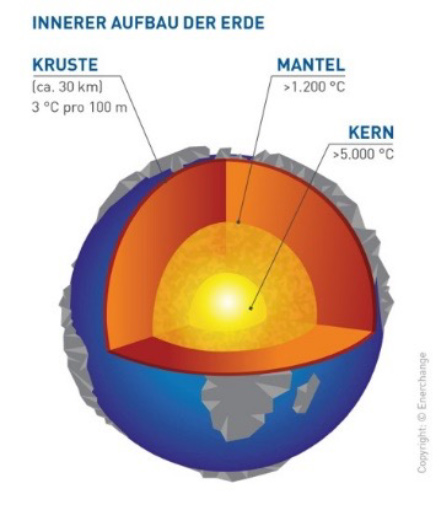
Geothermal energy – or geothermal heat – is the generation of energy from high temperatures that prevail below the earth’s surface in the layers of earth and rock. This type of energy generation is regional, cost-stable and sustainable. Geothermal energy is inexhaustible. It is generated from the earth’s core, which is several thousand degrees hot.
Fortunately, the earth’s crust on which we live is no longer quite so hot. The earth’s crust is around 30 kilometers thick. In the case of an apple, this would be roughly equivalent to the skin of an apple. At a depth of around three kilometers, it is already permanently around 100 °C. We can use this heat, for example for our district heating network.
How does geothermal energy work?
In order to use the heat at a depth of three kilometers, we need a suitable rock layer and a heat transfer medium. This could be hot water, for example. There are various layers of rock beneath us. Some of them are very porous and have many fissures and cavities. Others are relatively dense. Porous rocks can be filled with hot water, like a large sponge. In the fissure zones, on the other hand, the water flows.
The hot deep water is accessed via a borehole. The deep water is then pumped to the surface. It can then flow through a heat exchanger. There, the deep water transfers the heat to the water in our district heating network. The now cooled deep water is then returned underground via a second borehole. The system is designed so that the cooled water in the depths heats up again on its way back to the production well. This cycle makes geothermal energy a sustainable source of energy. And with regional added value.
These strong arguments are also confirmed by Dr. Uwe Baaske, Geothermal “Pfälzer Wärme” project manager at SWK Stadtwerke Kaiserslautern: “It is our responsibility to rethink energy supply. Also with a view to future generations. Deep geothermal energy is a strong building block for establishing a sustainable and independent energy supply. If our project leads to success, then we have the right key for a successful heat transition in our hands.”
How safe is geothermal energy?
The experience of recent years shows: Geothermal energy can be used very safely. Much has been learned from initial challenges such as in Landau. In addition to the technology, the legal framework has been adapted. Additional safety measures have been introduced.
Traffic light system gives early warning
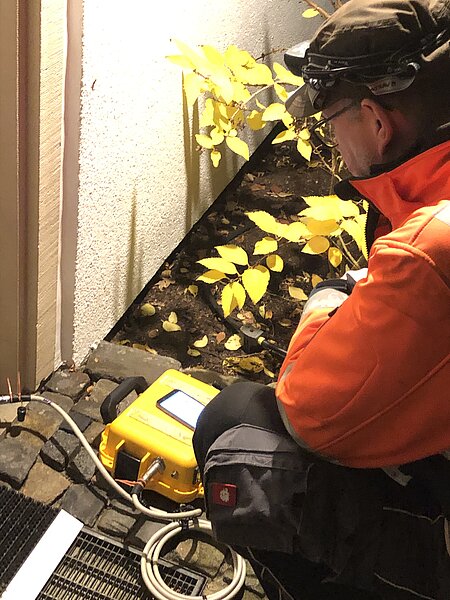
A seismic traffic light protects buildings and infrastructure. Many measuring stations are used to monitor the ground around a geothermal plant. If the measuring devices record vibrations, these are assessed using a traffic light system. If the prescribed limit value is exceeded, the output of the geothermal system is reduced. If the values are clearly too high, the system can also be switched off. In this way, we ensure that no vibrations are triggered that could cause damage.
Additional protection through the Federal Mining Act
At great depths, as planned by us, the Federal Mining Act (BBergG) also applies to geothermal energy. It lays down strict rules for the protection of groundwater and drinking water, which are regularly monitored. The Federal Mining Act also stipulates the “reversal of the burden of proof”. Should damage actually occur, the potential polluter, for example the operator of a geothermal plant, must prove that the damage was not caused by them. If this is not possible, damages are settled with the help of mandatory liability insurance.
Is geothermal energy even possible in Kaiserslautern?
In Kaiserslautern, we are still at the beginning. In contrast to the Upper Rhine or the greater Munich area, there are no geothermal plants here yet. By exploring the heat potential beneath our feet, we are doing pioneering work for the entire region. If we find a porous rock layer with fissures and cavities as well as hot deep water at depth, we can use it.
Sound waves can “look” underground
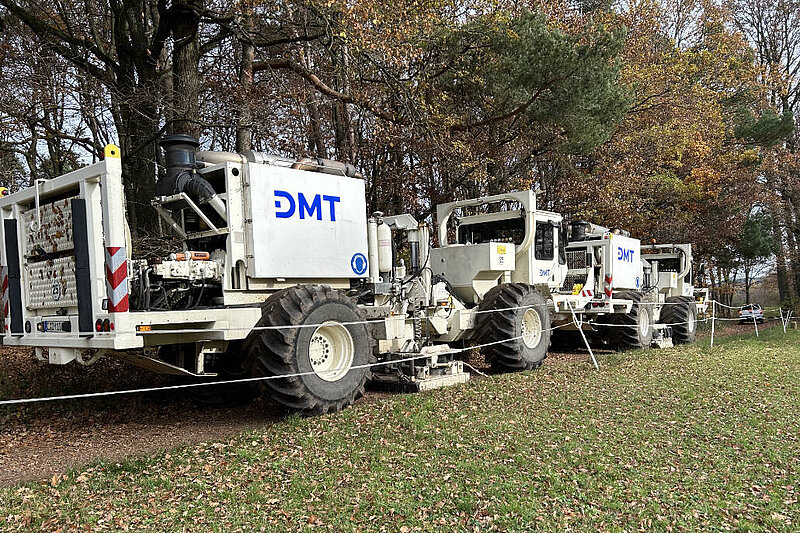
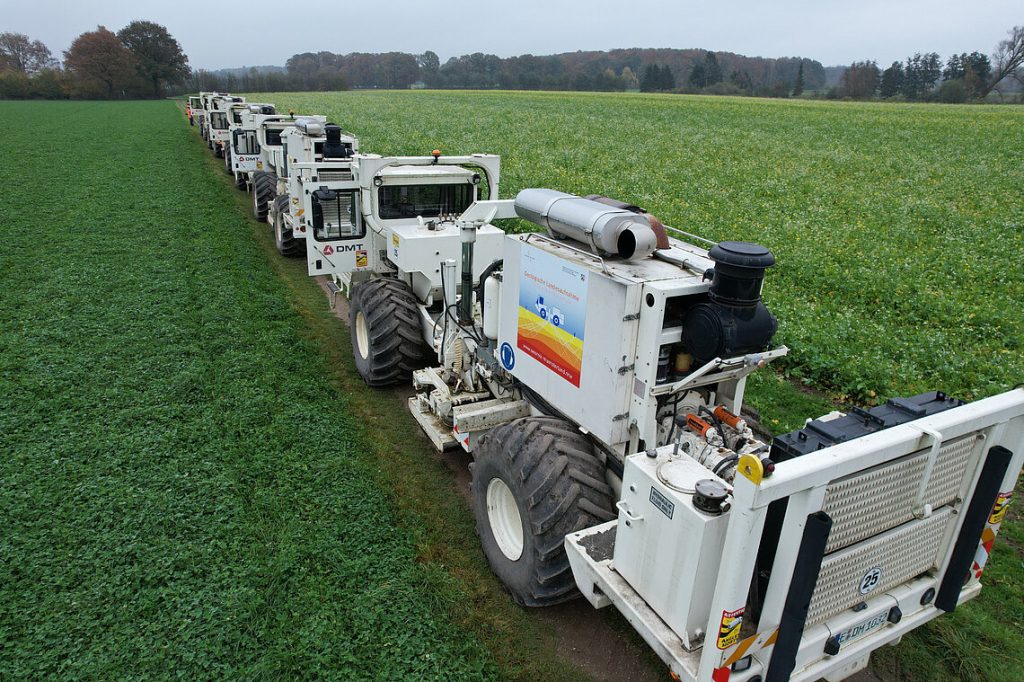
3D seismics, a technology comparable to ultrasound, is used to search for suitable rock. During seismic measurements, sound waves are sent underground. This allows us to look many kilometers deep. This requires correspondingly large devices. We use “vibro-trucks” as sound sources.
A vibro-truck is a truck. It weighs up to 30 tons and consists of a generator and a vibrating plate. For the 3D seismic survey, several convoys of two to three vibro-trucks each drive along a planned route. The convoy stops every 30 meters and the trucks lower their vibratory plates to the ground. The plates are then made to vibrate for a few seconds. These vibrations penetrate the ground in the form of sound waves and are reflected back at the boundaries of the different layers of rock. The reflected sound waves are recorded on the surface using small measuring devices known as “geophones”.
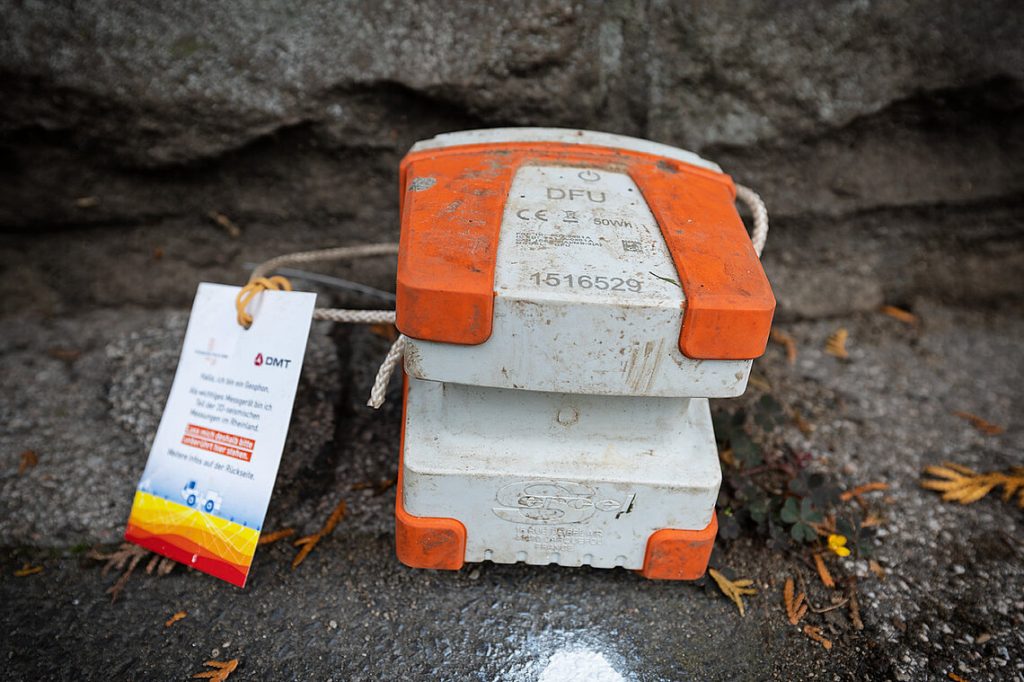
In Kaiserslautern and the surrounding area, we will deploy over 22,000 geophones over a large area. This will take place along roads and paths, in meadows and fields as well as on municipal and private properties. The geophones are localized via GPS and store all data during the measurement period (approx. four to six months). Geophones are highly sensitive measuring devices. The small cube-shaped boxes have a side length of approx. 15 cm. They record the reflected signals and process and store them. The geophones are then collected and read out.
We are currently preparing the measurements. In addition to planning the route, permits are also being obtained. The seismic measurements are planned outside the vegetation and breeding season from fall 2025 to spring 2026 over a period of approx. 6 weeks.
Location for a geothermal plant will not be determined until 2027 at the earliest
The data on our subsurface is evaluated by experts. They create a 3D model of the rock strata beneath Kaiserslautern. Based on the model, a decision is made as to whether geothermal energy is possible. If the results are promising, the model can be used to plan the boreholes. However, this process takes time. For this reason, a site for a geothermal plant will not be sought until 2027 at the earliest.
The current status of the project and all further information can be found at
You might also be interested in

Advisor, Energy and water, The region and us
In keeping with spring, the traffic lights also light up green in March
SWK's water traffic light provides early information on the status of the drinking water supply. It is still green at the beginning of the new year. An important criterion for the water traffic light is the level of the Lauterspring spring, which we constantly monitor.
Energy and water, Energy future, The region and us
Seismic measurements for geothermal energy in the region completed
The vibro-trucks have been on the road in Kaiserslautern and the surrounding area since November 13, 2025. After almost four weeks, we were able to complete the measurements on December 9, 2025. The small orange-grey plastic cubes (geophones) that were distributed everywhere have already been collected again.